
Landscape design, planting beds, privacy plantings, new lawns and artificial turf, planned for South Jersey soil and weather. Free estimates.
NDS-Certified Drainage Contractors
Drainage Solutions in South Jersey, NJ
Puddles that linger for days, a lawn that squishes underfoot or water collecting against your foundation all mean rain has nowhere to go. Certified Property Services designs and installs drainage systems that collect that water and move it safely away from your home and yard.
Our NDS-certified drainage contractors start with a free drainage site inspection, then recommend the right fix for your property, from French drains and channel drains to regrading and underground downspout lines. Call us or request a free estimate to get started.
- Free drainage site inspections
- NDS-certified drainage contractors
- Solutions matched to your soil and slope
- Ask about 0% financing options
What We Offer
Drainage: What's Included
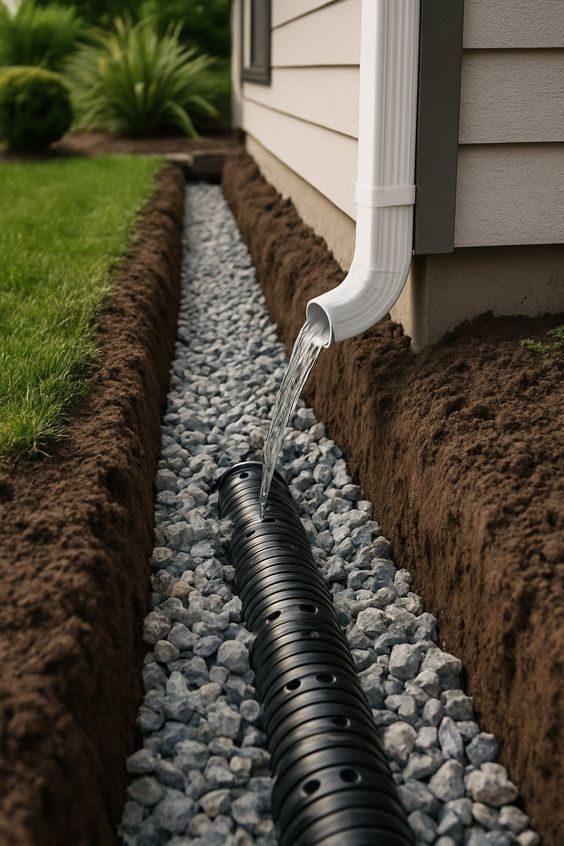
French Drains
A gravel-filled trench with perforated pipe that collects water from soggy lawns, low spots and foundation edges and carries it to a safe outlet.
Channel Drains
Slim grated drains set into driveways, patios, walkways and garage entrances to catch runoff before it reaches your doors, garage or planting beds.
Downspout Extensions & Underground Lines
Extensions or buried lines that carry roof water to a pop-up emitter or other outlet instead of dumping it next to the foundation.
Yard Grading & Regrading
Reshaping the ground so it slopes away from your home and water drains to a safe spot instead of settling against walls or in low areas.
Sump Pump Discharge Lines
Buried lines that carry sump pump water well away from the foundation, so it doesn't soak back in and cycle through the pump again.
Dry Wells & Catch Basins
Catch basins collect water at low points and feed the drain line, while dry wells hold runoff underground and let it soak slowly into the soil.
Fixes for Pooling Water & Erosion
Targeted solutions for standing water, soggy lawns, washed-out slopes and beds, and water collecting near your foundation, often combining several of these methods.
Free Drainage Site Inspections
We walk your property, check slopes, soil, downspouts and problem spots, and explain what is causing the water issue and how we would fix it.
Why Drainage Problems Are So Common in South Jersey
South Jersey sits on the Atlantic Coastal Plain, where the ground is built from layers of sand, silt and clay. Sandy topsoil drains quickly, but many yards hide a layer of clay or compacted fill below it. Water soaks in, hits that dense layer and spreads sideways, so the lawn stays soggy long after the rain stops.
Across Gloucester, Camden and Burlington Counties, the details change from one property to the next. Older neighborhoods in Woodbury and Gloucester City often have small lots where roof water and a neighbor's runoff meet in the same low spot. Newer homes in Mantua Township or Mount Laurel Township may sit on graded fill that settles and holds water. Near creeks and lakes, as in Paulsboro or Medford, a high water table can keep low ground wet for days.
Weather adds to the strain. Summer thunderstorms drop heavy rain fast, nor'easters bring long, soaking storms, and freeze-thaw cycles turn trapped water into ice that heaves walkways and loosens soil along foundations. A good drainage plan accounts for all of it.
Matching the Right Solution to the Problem
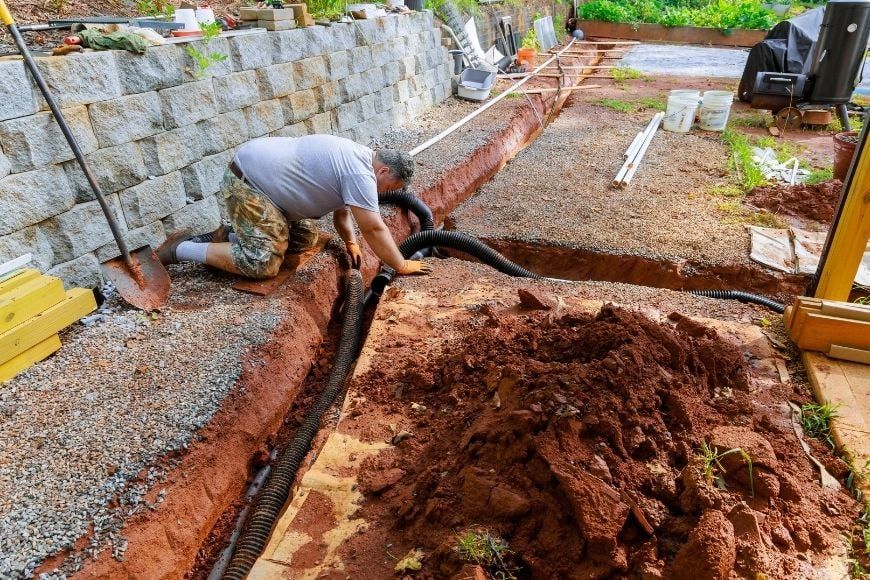
There is no one-size-fits-all fix for a wet yard. The right approach depends on where the water comes from, where it can safely go and how your property is shaped. Storm runoff rushing across the yard needs a different solution than groundwater that keeps a low area soggy.
Many properties need a combination, such as downspouts and a French drain tied into one underground line. We explain each option in plain language so you know why we recommend it.
- French drains suit soggy lawns, wet low spots and groundwater along foundations and retaining walls.
- Channel drains fit driveways, patios and garage entrances where water sheets across hard surfaces.
- Underground downspout lines handle roof runoff, which pours out in concentrated streams right beside the house.
- Regrading corrects yards that slope toward the house or trap water in dips.
- Dry wells help on lots with no good outlet, as long as the soil below can absorb the water.
Where the Water Goes Matters
A drain is only as good as its outlet. Collected water has to end up where it can soak in or flow away without creating a new problem, such as a pop-up emitter in a lower part of the lawn, a dry well, or a curb outlet where your town allows it.
Many New Jersey towns also regulate discharge. Sump pump and roof water generally can't be tied into the sanitary sewer, and it shouldn't be aimed at a neighbor's property or across a sidewalk where it can freeze. We plan outlets with those limits in mind.
Once your system is in, a little routine care helps it keep working well.
- Clean gutters regularly so leaves and grit don't wash into underground lines.
- Keep mulch, soil and leaves off grates, catch basins and pop-up emitters.
- Call us if water starts pooling in a new spot after a storm.
Common Signs
Is It Time to Call Us?
If any of these sound familiar, a free estimate is a good next step.
- Puddles that stay in the yard a day or more after rain
- Soggy, spongy lawn areas, moss or bare patches in low spots
- Water collecting along the foundation, driveway or patio
- Mulch and soil washing out of beds or down slopes
- Damp walls, musty smells or water in the basement or crawl space
- New cracks in foundation walls, walkways or the patio
How It Works
Our Drainage Process
Step 1: Free Site Inspection
We walk your property with you, look at where water collects and check slopes, soil, downspouts and sump pump discharge to find the source.
Step 2: Custom Plan & Free Estimate
We recommend the right mix of drains, grading and outlets for your yard and explain the full scope before any work begins. Ask about 0% financing options.
Step 3: Professional Installation
Once underground utilities are marked through New Jersey 811, our crew installs the system with quality NDS components, backfills the trenches and cleans up the work area.
Step 4: Final Check & Walkthrough
We confirm water flows freely to the outlet, show you how the finished system works and share simple tips to keep it flowing.
FAQ
Drainage Questions
Answers to common questions from South Jersey homeowners. Don't see yours? Give us a call.
What types of drainage services do you offer?
We install French drains, channel drains, downspout extensions and underground downspout lines, sump pump discharge lines, catch basins and dry wells, and we regrade yards so water flows away from your home. Many projects combine several of these into one complete water management system built around your property's slope, soil and layout.
Do you offer free drainage inspections?
Yes. Our drainage site inspections are free. We visit your property, look at where water is collecting and where it is coming from, and check the grading, downspouts, soil and any sump pump discharge. Then we give you customized recommendations, so you understand the problem and your options before deciding anything.
How can I tell if I need drainage work?
Watch for puddles that linger long after rain, lawn areas that stay soggy, water pooling near the foundation, soil or mulch washing away, and dampness or leaks in the basement. Cracks in the foundation or walkways can also be a warning sign. If you notice any of these, contact us for a full evaluation.
Are your drainage systems long-lasting?
Our systems are built for long-term performance. We use high-quality NDS drainage components designed for durability and low maintenance, set pipe on a consistent slope and add filter fabric where the soil calls for it to help keep silt out. Clean gutters and clear grates help keep everything flowing.
What is the difference between a French drain and a channel drain?
A French drain is a buried, gravel-filled trench with perforated pipe that collects water soaking into the ground, so it suits soggy lawns, low spots and foundation edges. A channel drain is a narrow grated trough set flush with a driveway, patio or walkway that catches water running across the surface. Many properties benefit from both.
Can better yard drainage help keep water out of my basement?
Often, yes. Much basement water starts outside, from downspouts emptying beside the house, soil sloping toward the foundation or saturated ground. Regrading, underground downspout lines and French drains move that water away before it reaches your walls. During the free inspection, we look at these outside sources and explain what drainage work can do.
Service Area
Proudly Serving South Jersey
Based in Woodbury Heights, NJ, we work with homeowners across Gloucester, Camden, Burlington, Salem and Atlantic Counties, NJ.
- Gloucester County
- Camden County
- Burlington County
- Salem County
- Atlantic County
Related Services
Other Services You May Need
Concrete walkways, sidewalks, steps, patios and driveways, plus repair, resurfacing and replacement, built for South Jersey weather. Free estimates.
Repairs from your home inspection report, including railings, steps, carpentry, grading and storm damage, for South Jersey buyers, sellers and homeowners.
Free Estimate
Get a Free Drainage Estimate
Tell us about your project and where the property is located. Our team will reach out to talk it through. Prefer to talk now? Call (856) 516-1347.
- Free estimates and consultations
- Free drainage site inspections
- NDS-certified drainage contractors
- Ask about 0% financing options
Prefer to talk?
(856) 516-1347Ready to Talk About Your Drainage Project?
Call today or request your free estimate online. Ask about 0% financing options.